Museum of the Bible: Revealing Earlier Texts in the Codex Climaci Rescriptus
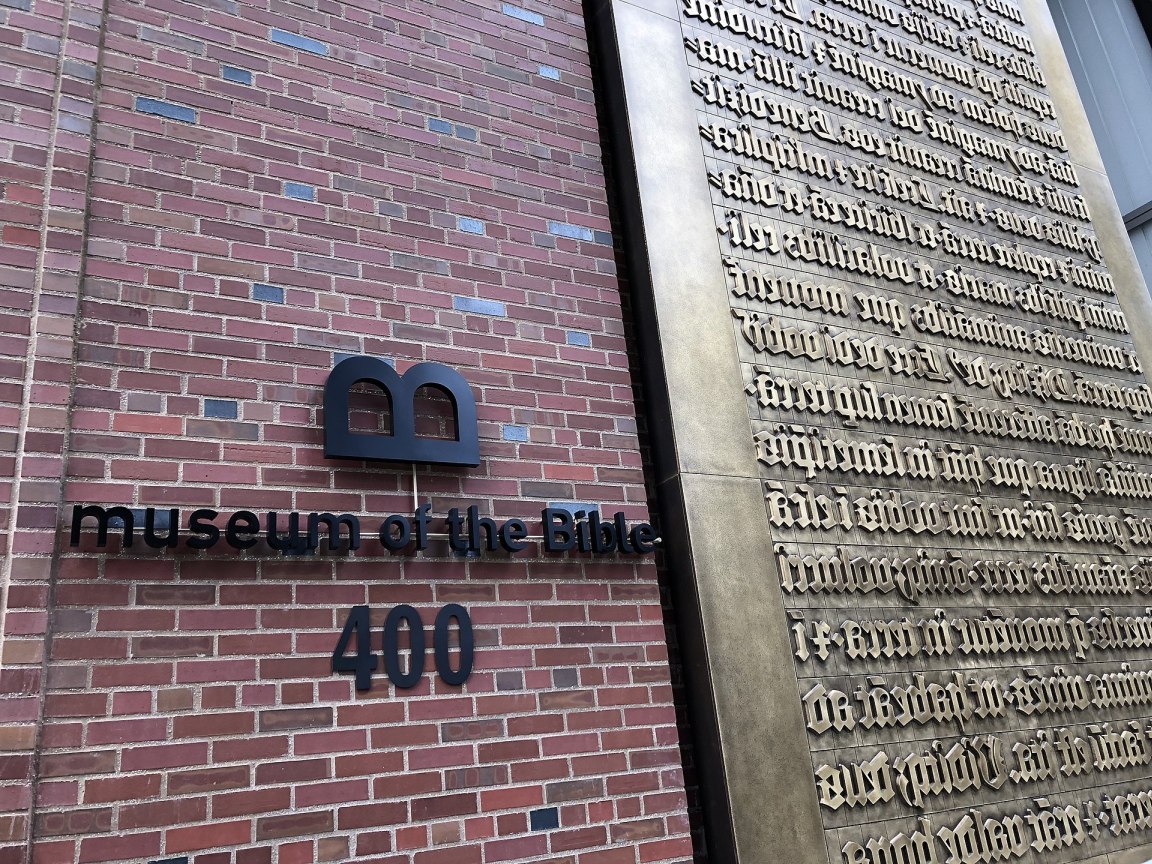
Picture from: https://en.wikipedia.org/wiki/Museum_of_the_Bible#/media/File:Museumofthebible-2017-11-04-exterior-front-left-label.jpg
A manuscript with more than one history
The Codex Climaci Rescriptus, held by the Museum of the Bible, preserves several layers of writing. Its parchment leaves were taken from earlier Greek and Christian Palestinian Aramaic manuscripts, erased, and reused for Syriac texts in the ninth or tenth century. Traces of the earlier writing remain beneath the visible text, creating opportunities for research that conventional photography alone cannot fully address.
Imaging beneath the visible text
In 2017–2018, the Early Manuscripts Electronic Library worked with the Lazarus Project and the Museum of the Bible Scholars Initiative to undertake spectral imaging of the manuscript. The project combined image capture and processing to improve the visibility of its underlying texts and support their examination by specialists. A subsequent imaging campaign at the museum brought together specialists from EMEL and the Rochester Institute of Technology, with technical support from MegaVision. EMEL’s project update, on December 2025, describes high-resolution datasets captured to document key folios, assess their condition, and help identify areas for further scientific study.
From spectral images to scholarly discoveries
The recovered writing includes both biblical and classical material. Among the research outcomes, a 2022 study by Victor Gysembergh, Peter J. Williams, and Emanuel Zingg identified evidence of Hipparchus’ star catalogue in the manuscript’s underlying Greek text. This finding resulted from scholarly analysis of the recovered material, illustrating how imaging can make previously inaccessible evidence available for interpretation. Research has also continued on the manuscript’s Aramaic texts. A 2024 article by Kim Phillips presents a fresh transcription of part of the codex based on high-resolution multispectral images, alongside an examination of its physical structure and textual features.
Making the evidence accessible
The Museum of the Bible provides selected color and multispectral images for researchers and the public. These resources allow readers to examine the manuscript alongside published studies, extending the value of the imaging beyond the original campaign.